How To Care For And Store Fine Jewelry At Home: A Practical Guide
Fine jewelry is built to last. But whether it actually does depends almost entirely on how you treat it when you are not wearing it. The way you clean it, where you store it, what you expose it to, and how consistently you maintain it determine whether your pieces look pristine in ten years or require expensive professional restoration. The truth is that caring for fine jewelry at home is not complicated. It takes a few smart habits and a bit of consistency.
In this guide, we are walking through everything you need to know to protect your jewelry at home. We are covering the daily habits that prevent damage before it starts, how to clean different types of jewelry safely, the best storage systems, what to absolutely avoid, and when to take something to a professional. Think of this as your complete home care guide.
Daily Habits That Make The Biggest Difference
Most jewelry damage happens not during dramatic accidents but through slow, repeated exposure to things we barely notice. Soap residue builds under ring settings and dulls stones. Perfume and hairspray coat chain links and reduce shine. Lotion leaves a film on diamonds that blocks their brilliance. Hand sanitizer and cleaning chemicals can corrode certain metals and settings over time.
The most impactful habit for caring for fine jewelry is a simple one: put jewelry on last and take it off first. Apply your perfume, lotion, sunscreen, and hairspray, then put your jewelry on. Take your jewelry off before you wash dishes, clean, swim, exercise, or go to bed. These behavioral changes alone prevent the majority of damage that brings jewelry into professional repair.
How To Clean Fine Jewelry At Home
You do not need expensive equipment to clean fine jewelry at home. For most gold and diamond pieces, a gentle cleaning once a month keeps them looking their best. Fill a small bowl with warm water and add a drop of mild dish soap. Place the piece in the solution and let it soak for 15 to 20 minutes. Then use a soft-bristled toothbrush to very gently brush around the setting and under the stone where buildup collects. Rinse thoroughly under clean running water and pat dry with a soft, lint-free cloth.
A few important exceptions: Do not use ultrasonic cleaners at home on pieces with treated gemstones, pearls, emeralds, opals, or lapis lazuli. These stones can be damaged by the sound waves. Do not use toothpaste, which is abrasive and can scratch metal surfaces. Do not use bleach or household chemical cleaners under any circumstances. When in doubt, a soft cloth and plain warm water are always safe.
How To Store Fine Jewelry Properly
Proper storage is one of the most overlooked aspects of caring for fine jewelry at home. The number one rule: keep pieces separated. Diamonds can scratch other stones and metals. Gold can scratch silver. Pieces stored together in a heap will inevitably damage each other.
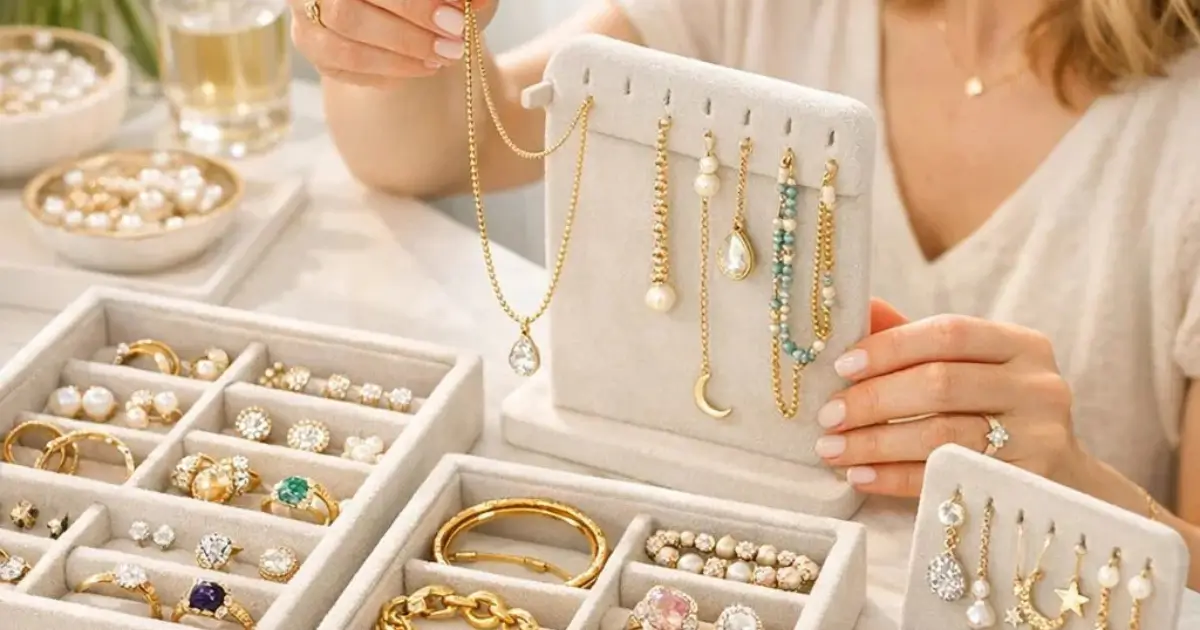
Choose a jewelry box with individual soft-lined compartments for rings, earrings, and pendants. The lining matters. Avoid foam or synthetic fabrics that may contain chemicals that accelerate oxidation. Look for cotton or velvet linings, ideally anti-tarnish treated. For necklaces, hang them individually or store each one in a separate soft pouch with the clasp outside the pouch to prevent kinking and tangling.
Temperature and humidity matter too. Store jewelry away from direct sunlight and heat, which can cause discoloration and warping. Avoid bathroom storage entirely since the fluctuating heat and humidity accelerate tarnishing and can damage certain gemstones over time. A cool, dry, dark interior closet is ideal.
What To Avoid Entirely
When it comes to fine jewelry care, certain things are simply off the table. Never wear jewelry in a swimming pool or hot tub. Chlorine is highly damaging to gold and can erode the finish of gemstones over time. Never wear rings or delicate bracelets to the gym. The combination of metal-on-metal contact and sweat is rough on both the finish and structural integrity of settings.
Pearls deserve a special mention. They are organic and therefore more fragile than most gemstones. Never expose pearls to acids, harsh chemicals, or prolonged sunlight. Wipe pearl pieces with a soft cloth after wearing, since the acids in skin oils can damage their nacre over time. Store pearl pieces flat rather than hanging, which can stress the silk thread.
When To Take Jewelry To A Professional
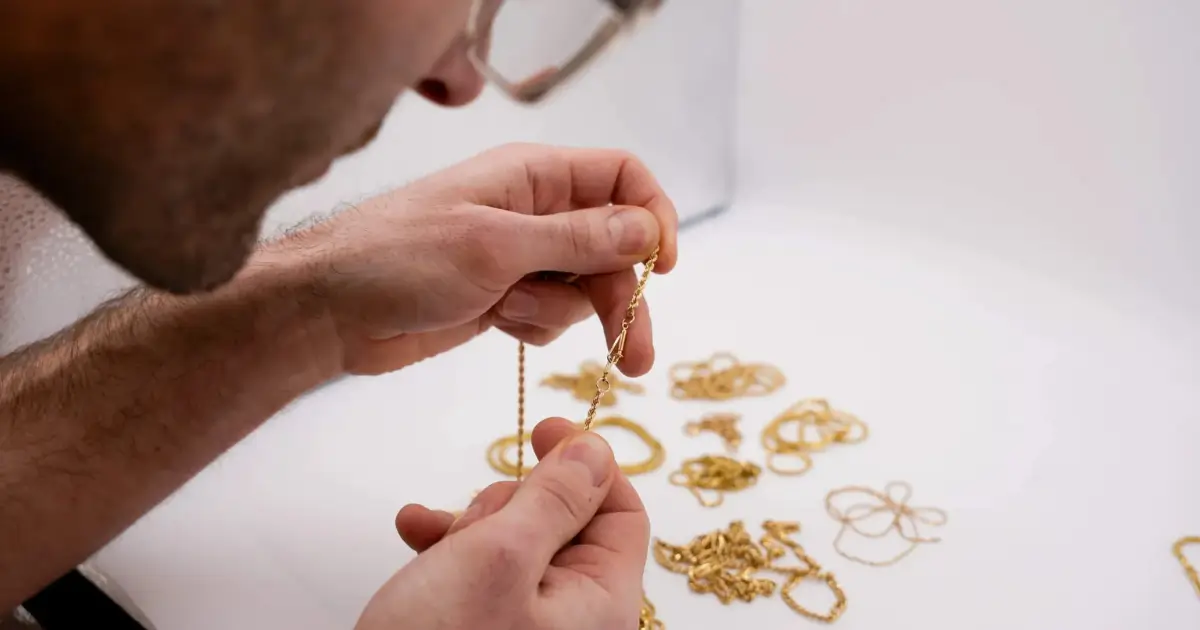
Even with perfect home care, fine jewelry should have professional attention periodically. A professional jeweler can check prong settings, polish metal, re-tip worn prongs before a stone is lost, clean in a controlled environment, and identify any developing issues before they become expensive repairs. Annual professional cleaning and inspection is a reasonable standard for pieces you wear regularly.
If you notice a stone feels loose, a clasp is not closing securely, or a piece has developed deep scratches or significant tarnishing, do not wait. Address it promptly. A professional repair before a stone is lost is always less expensive than replacing the stone after it is lost.
Protect What You Love
Learning how to care for and store fine jewelry at home is one of the most practical things you can do for the pieces you love. With consistent habits, proper storage, and occasional professional care, fine jewelry truly does last generations. For more expert guidance on fine jewelry, or when you are ready to add pieces to your collection that are built to last, visit Ayan Jewelry.